News
Arts & Sciences
Health & Wellness
Arts & Sciences
JWU Arts & Sciences Faculty Feats from the Fall Semester
The John Hazen White College of Arts & Sciences (and JWU as a whole) is filled with faculty who bring impressive credentials, vast industry experience and a passion for educating into the classroom every day. During the Fall 2025 semester, Arts & Sciences faculty had some big wins. Here’s a sample of what happened around the college.
Stacey Kite shared her expertise through publication and a local news appearance.
The fall semester was a busy time for Professor Stacey Kite, DBA, who teaches in JWU’s Educational Leadership doctorate program. First, she completed a three-part series of articles that were published in The Researcher, a Northeastern Educational Research Association (NERA) publication.
“I decided to write this series after presenting a workshop at NERA on instrument development,” Kite said. “I was surprised so many individuals were interested in the session. I wanted a way to document the process for them, so this series walks a novice researcher through the development of a quantitative instrument — a questionnaire. It begins with identifying the purpose, then details item development and finally, describes the validation process.”
The articles tie directly into what Kite teaches in the classroom, so she often uses them in her teaching. Her students also benefit from her expertise in cyberbullying and internet risk, which has been her research focus for the last 20 years. During the fall semester, NBC 10 News reached out for her expert opinion on Instagram’s new safety features.
Staying up to date on the latest technology and research trends is crucial to her role as a professor. “Since I teach research, I need to stay current and model what I preach,” said Kite. “Being able to guide students through a process that I am experienced in today, not five years ago, is important.”
Looking ahead, Kite will be working on a new research study about U.S. student views on age restrictions for social media, among other projects.
Scott Palmieri published two short stories.
Professor Scott Palmieri, Ph.D. has penned many short stories inspired by his own life, and two of them were published during the fall semester.
“I have written several short stories loosely based on one summer playing baseball in a college player league in Geneva, New York,” Palmieri revealed. “This was a great summer with some very colorful characters, and over time, these stories developed.”
“Midterm Exam” was published in Under Review, an online literary journal for poems and stories related to sports. The story follows the musings of Sarah Wheeler as she stumbles upon an old poem she wrote for a college midterm exam. “It’s about memory and loss and an attempt to reclaim a sweet memory that had been damaged by the disappointments life brings,” Palmieri shared. “It is based on an actual poetry assignment I had when I was a college senior.”
The second story, “Turning Stone,” also draws from Palmieri’s college years and that summer in Geneva. It was published by Twin Bill, an online literary baseball journal. “It’s about a baseball player stranded overnight in an upstate New York casino, desperate to get back in time for his team's next game, which will bring his strange odyssey full circle,” said Palmieri. It was inspired by one of his actual teammates, who was indeed abandoned at Turning Stone Casino.

Baseball has been an important part of Palmieri’s life, which is why he also serves as the faculty mentor for JWU men’s baseball team. “It was sort of our family trade — my father, my three brothers and I all played college baseball, so baseball has shaped my life in a very positive way,” he shared. “I have been writing about it through fiction and non-fiction pieces. I love bringing the reader into these unique worlds, celebrating both the meaningful and the ridiculous through the many colorful characters I have encountered.”
He hopes to eventually publish a book of his collection of Geneva baseball stories, but for now, he is currently working on a memoir essay about his time in the Providence College baseball program.
Yesim Giresunlu teamed up with fellow researchers to understand the counseling student experience.
Yesim Giresunlu, Ph.D., is an associate professor in JWU’s Clinical Mental Health Counseling master’s program, so her interest in understanding how clinical supervision can impact counseling students’ learning is not a surprise. She worked with two other researchers to publish the article “Focus of Clinical Supervision in Integrated Behavioral Health (IBH) Settings” in Teaching and Supervision in Counseling, a regional counselor education journal.
“We looked at counselor trainees (master's level counseling students) and what their supervision focused on in integrated behavioral health settings,” Giresunlu said. “We found that supervision mainly helped trainees build practical counseling skills and learn how to work confidently as part of an interdisciplinary team.”
She and her fellow researchers used a mixed-methodology approach to data collection and analysis, a process that took about four years to publish. But for Giresunlu, it’s worth it.
“I use the findings of this study in my teaching by emphasizing collaboration and building students’ confidence to work in cross-functional health settings,” she said. “This helps students develop their professional identity, skills and communication strategies.”
Professor Carla White Ellis was named Director of the Center for Teaching & Learning.
JWU’s Center for Teaching & Learning offers professional development resources and programming for faculty and staff. The center’s goal is to support excellence in teaching and learning to improve student academic performance and retention.
Carla White Ellis, Ph.D., CFD, was appointed the new director of the center starting in Spring 2026. She has been at JWU for 15 years, bringing a wealth of experience and a distinguished record of leadership and service to the role.
“I am honored and excited to begin this new role,” says Ellis. “This position offers a meaningful opportunity to further my commitment to teaching excellence. I am especially eager to strengthen our sense of community through collaboration with the Providence and Charlotte campuses and to explore innovative ways to share best practices that enhance teaching and learning across the university.”
Ellis will work closely with Assistant Director of the Center for Teaching & Learning Alyson Marzini to prioritize daily tasks, set goals and oversee the operations, events and initiatives of the center for the Providence and Charlotte campuses.
The center already has some exciting sessions and programming planned for the spring semester, such as Integrity By Design: Fostering Ethical and Engaged Classrooms, a four-part interactive series that will offer practical strategies and campus resources to support student success.
Suzanne Buglione published ground-breaking research on academic leaders in higher education.
Associate Professor Suzanne Buglione, M.Ed., Ed.D., is teaching the next generation of academic leaders in JWU’s Educational Leadership doctorate program, but she has also become an expert on the greatest challenges facing current leaders in the field today.
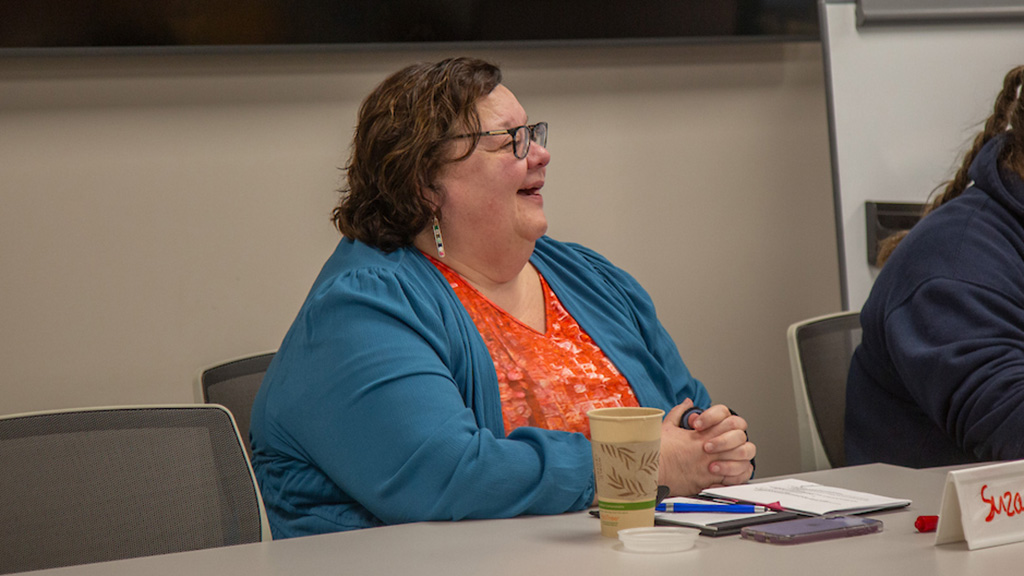
Buglione led a team of three other researchers to develop a two-part series that explored the lives of chief academic officers (CAOs) for The EvoLLLution®, an online higher education publication. “We did a qualitative study with provosts and vice presidents of academic affairs at different institutions to understand their lives,” Buglione explained. “It was the first research of its kind and shared their untold stories.”
Part 1: Inspiring or Inhibiting Today’s CAO: Lessons from Senior Academic Leaders
Part 2: Inspiring Today’s CAO: Strategies for Critical Relationships
The process of conducting the research and writing the articles took well over two years to complete. “Research takes a long time!” said Buglione. She and her team had to complete many steps, including designing the study, recruiting participants, conducting interviews and focus groups, analyzing the data and forming their findings.
What the team discovered was that the high turn-over rate of these positions is largely due to the stress, mental exhaustion and lack of support these roles face. “It was emotionally difficult for participants and the team given the intense stories that were shared,” Buglione revealed.
However, she believes it is extremely important to share these stories and prepare her graduate students to take on executive leadership roles. “We want students to know that the amazing role of a chief academic officer is one of the toughest jobs in the field, but one that can truly make change,” she said. “They oversee academic work, which is the heart of what we do in our institutions. They must partner with faculty yet meet all the demands of innovation. It’s a difficult job, but one that is so rewarding. Graduate students should understand the experience, as they may aspire to that role.”
Professor Mark Peres, J.D., published TWO books.
Professor Mark Peres, J.D., teaches ethics and leadership courses at the Charlotte Campus, but he is also a talented writer who had two books published during the fall semester. The first book was a deeply personal project. The Man Who Lived a Hundred Lives is a memoir about Peres’ father, Ambrosio Benchimol Peres. He spent his life constantly moving and reinventing himself — from growing up in the Amazon jungle to living all over the U.S. and uprooting his family 20 times in as many years.
“The memoir was an intimate journey that involved revisiting recorded conversations with my father, archival research and careful reflection of a time when I first began my professional life,” Peres shared. “Writing it required balancing historical detail with emotional honesty, as I sought to understand my father's immigrant story and the legacy it left in my own life.”
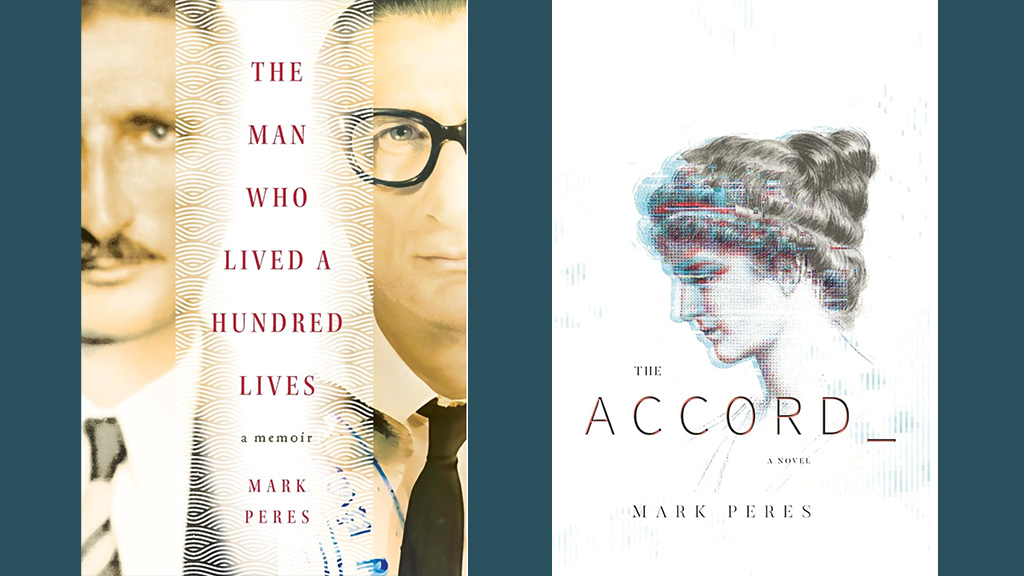
His second book, The Accord, is a fictional novel about a grieving professor who develops a deep connection to artificial intelligence after the loss of her daughter. “The Accord grew out of my work in ethics and leadership and my deep curiosity about how artificial intelligence is reshaping human agency, identity and moral responsibility,” said Peres. “I wanted to explore not only the technology itself, but the relational and philosophical questions it raises about what it means to be human in an age of intelligent machines.”
Both projects took about two years to complete from initial concept to publication — a process Peres has enjoyed sharing with his students. “My students see firsthand how big ideas move from curiosity to sustained inquiry to published work,” he said. “I help students understand that writing is both a craft and a form of leadership. They benefit from learning the practical realities of research, storytelling and publication while being challenged to see their own ideas as worthy of serious development.”
Want to learn from accomplished faculty like this?
Related Posts
Arts & Sciences
Alumni
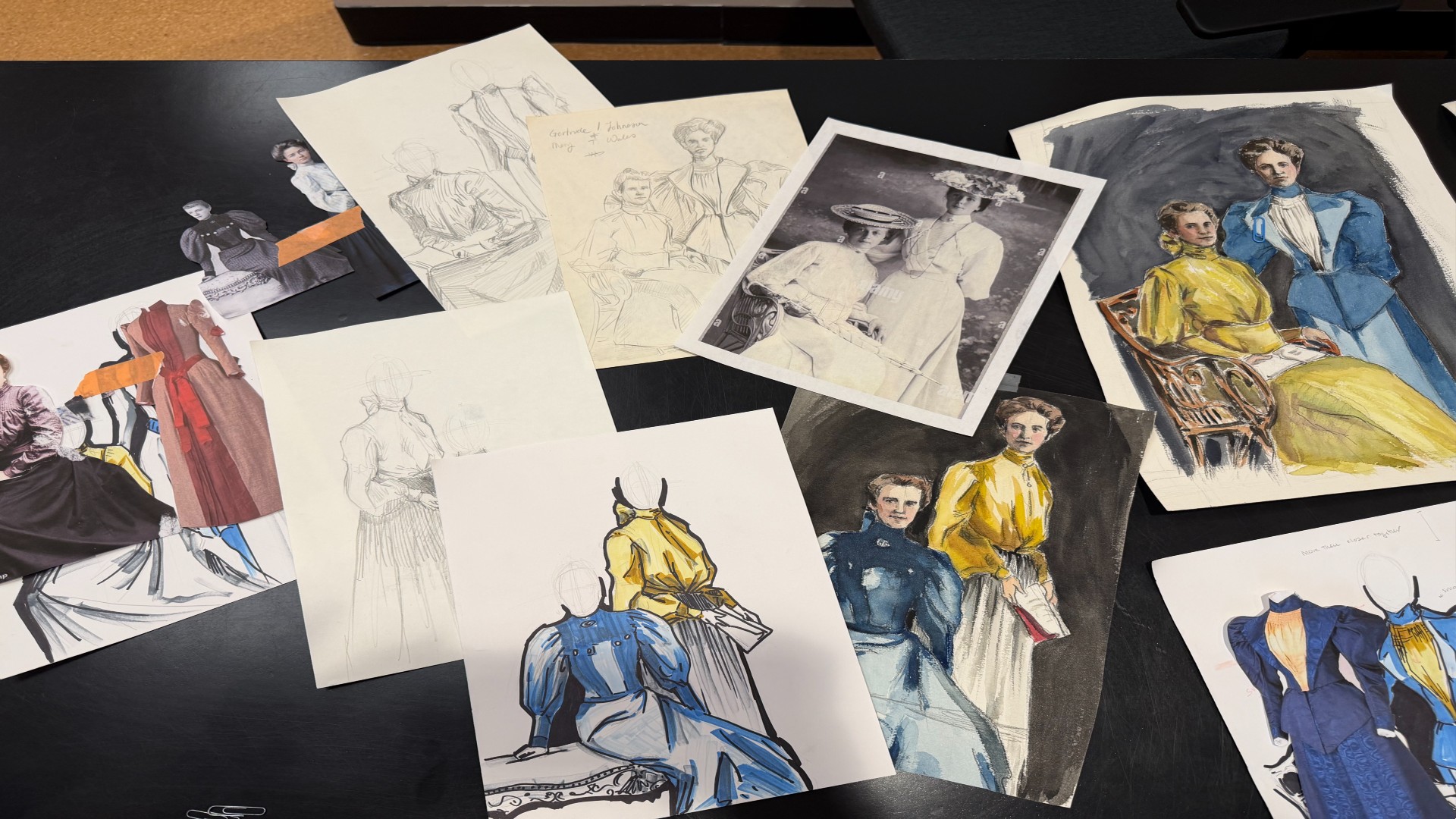
New Portrait Honors JWU Founders Gertrude Johnson and Mary Wales
Experiential Education
Arts & Sciences