News
Arts & Sciences
Health & Wellness
Health & Wellness
Students
Future Occupational Therapists and Nutritionists Team Up at JWU
“I find interprofessional relationships invaluable,” says Assistant Professor Kathryn “Kate” Burke, OTD, OTR/L. “I’m so excited to introduce students to the concept.”
She should know; before transitioning to teaching in Johnson & Wales University’s Occupational Therapy Doctorate (OTD) program, Burke worked in skilled nursing and acute rehabilitation facilities for 22 years, including Southeast Rehab at Charlton Hospital in Fall River, Massachusetts. In each locale, Burke worked closely with occupational therapists (OTs), nurses, social workers and more.
Meanwhile, Professor Kara Cucinotta, D.C.N., M.S., RDN, LDN, CNSC of JWU’s Master of Science in Clinical Nutrition & Dietetics (MSCND) program has collaborated often with other practitioners during her 17 years in inpatient hospitals, outpatient clinics and a private practice for nutrition counseling.
As a recent example of how JWU students learn from and with each other through collaborative Interprofessional Education (IPE) opportunities, this April, OTD and MSCND students teamed up to work with “Jessica,” a woman with multiple sclerosis (MS) with whom Burke developed a relationship after caring for her in Fall River years ago.
“Often as a healthcare professional you don’t get to the see how the story ends,” Burke explained. “I’m fortunate to still be in touch with Jessica, and we’re fortunate to have her return to JWU to help future practitioners learn to work together.”
OTD and MSCND students teamed up to ask Jessica questions, gather info and come up with goals for her to work on, learning along the way to consider other points of view.
What It’s Like for an Occupational Therapist to Collaborate with Dietitians
Seeking the Same Goal: Helping the Patient
“I like working with all populations,” says Meghan Dinsmore ’28 OTD, who is particularly interested in patients with neurological disorders, spinal cord injuries and MS.
She appreciated MSCND students’ contributions. “We don’t always consider that nutrition is important for different conditions,” she admits. “Having both MS and Polycystic Ovary Syndrome (PCOS) makes Jess insulin-resistant, so it’s important to hydrate. While we focused on mapping out shade or benches on her walks, they explored different foods and their effect on Jessica. It’s really valuable to have two different professionals with different educations and ideas come together; it creates stronger and well-rounded care for people.”
Dinsmore has had other IPE experiences at JWU. “We’ve worked with Doctor of Physical Therapy (DPT) students several times. We have similarities in approaching care. The difference: PT works on strengthening the affected side after a stroke or injury, and they would send the patient to OT so we can teach them about adaptive equipment such as walkers to help them be independent in their environment. We complement each other.”
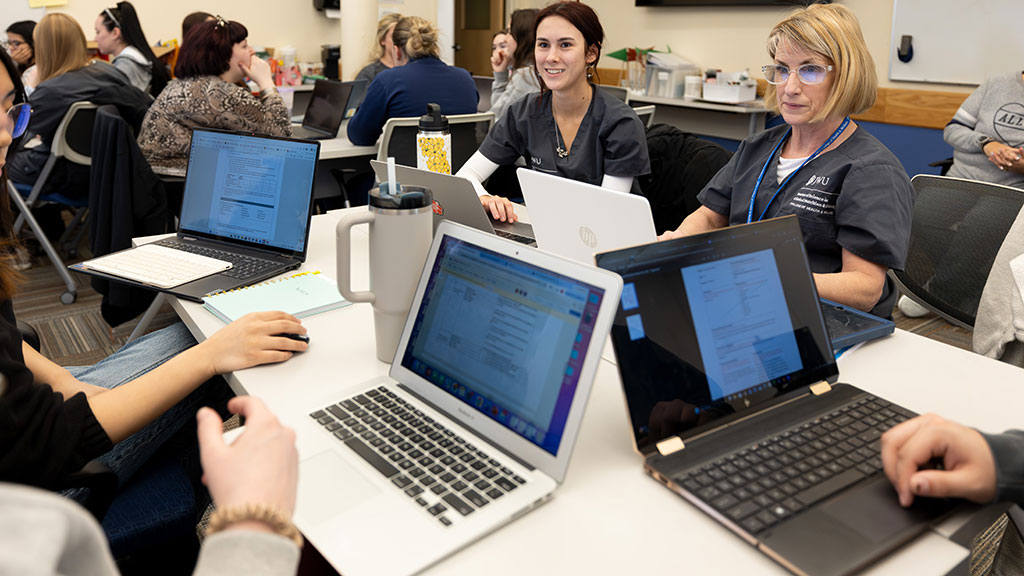
But her JWU culinary classes really expanded her mind: “We learned to work with clients on how to respect their cultures while getting them on a healthier path. We know that someone with congestive heart failure needs low sodium while someone with diabetes needs low carbs. But when we worked with JWU culinary students to come up with meal plans, we also considered foods the individual is comfortable eating for other reasons.”
The biggest benefit of interprofessionalism according to Dinsmore: “Everyone has the same goal: care for the client and build the best path to where they want to be. In OT we have great ideas, but if you bring in PT, nutrition, nursing, social work and counseling, our different skills sets can provide additional options. With everyone having the same goal, you’re bound to be more successful in helping clients.”
“Learning how to communicate was huge,” she notes. “How do I respect this person even if I disagree with them, and how do I communicate my view while still accounting for their views? That was important because you’ll be communicating with people who are educated and have great ideas.”
How Additional Perspectives Improve Healthcare
Haylee Canadas ’28 OTD plans on advocating for women managing reproductive challenges: “Women are not always listened to by doctors, and I want to help broaden people’s perspectives and knowledge of how their body works.”
Getting to help Jessica, a mother with physical limitations, was perfect for her — and working with MSCND students was icing on the cake.
“It was cool to see their perspective because we don’t always focus heavily on the nutrition side, even though it helps people have the energy to do what they want and need to do,” she notes. “My group considered Jess’ infusion schedule and recommended a bulk meal prep when she’s more relaxed and energized, and the nutrition students figured out how to make it easier to incorporate more veggies and proteins. IPEs like this put our knowledge to the test, because we identify concerns and plan how to alleviate them.”
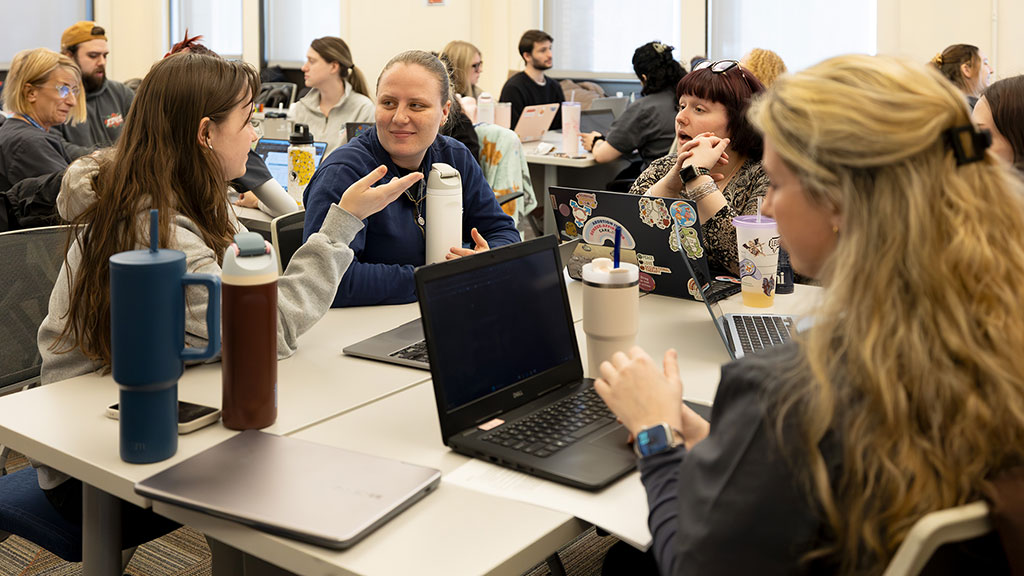
Why interprofessionalism is important to Canadas: “In my career I’ll be working with OBGYNs, nurses, doctors, doulas and most notably, families who will have questions and concerns; I’ll need to communicate with them in a way that’s productive and helps clients feel safe. Working with people from other healthcare professionals and understanding their roles helps us build our skills and our knowledge. These IEPs helped me respect other professionals even more! We’re all there to give the best care possible, and collaborating will make us better, well-rounded clinicians.”
What Nutrition Students Gain from Collaborating with OTD and PT Peers
Expanding Your Understanding of Patient Needs
“People don’t always consider the impact dietitians can have on patients, so it’s nice to establish relationships with other JWU students,” says Sarah Madison Hecht ’26 MSCND. “For example, we worked with OTD, DPT and Counseling students to create posters on student health and wellness. We talked about mindful eating and how to maximize things you need during high stress, counseling students presented on stress relief activities and PT students presented on stretching. It helped show what we can each bring to the table and demonstrate how we can work together to achieve the same goals.”
Hecht was impressed with OTD students’ well-rounded approach with Jessica. “They consider mental health in their work, which my classmates and I found interesting. They not only addressed mobility but also things about mood and aspects of a person’s day that can impact their condition, such as it could be harder to put together a meal or get out of the house to get food. Their perspective was very helpful.”
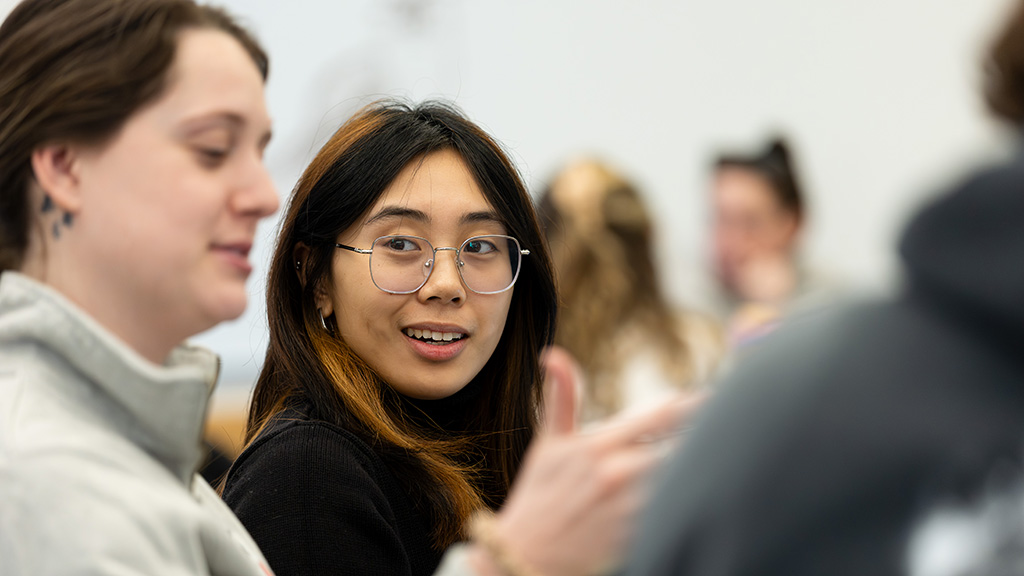
She adds, “We could come up with recipes beneficial to Jessica’s condition and consider what these meals can do for her, but as she sometimes struggles with weakness on her right side, the OTD students suggested bagged vegetables instead of cutting fresh ones. We thought of what she should eat, and they thought of how we can get that to her; it was a very beneficial tag team. Jessica is artistic, so the OTs recommended that she put recipes into a homemade cookbook or a scrapbook to help bring joy into her life.”
How this experience can benefit Hecht’s future career as an RD focusing on women’s health and food allergies: “Having the opportunity to speak to someone with mobility issues and combine our experience with an OT perspective prompted me to think about things that could help make my advice more accessible to different types of patients.”
Viewing Patients Holistically
Julia Caputo ’26 MSCND is preparing for a career in nutrition counseling, preferably incorporating sports nutrition and wellness-focused education. She too found working with OTD students an insightful experience.
“Their questions focused on understanding the patient's functional abilities and daily life,” she noted. “While we focused on nutrition-related behaviors and needs, they explored areas of her life that have become more challenging since her MS diagnosis, as well as potential leisure activities she may want to pursue, her religious beliefs, how infusions affect her daily functioning, and her involvement in support groups.”
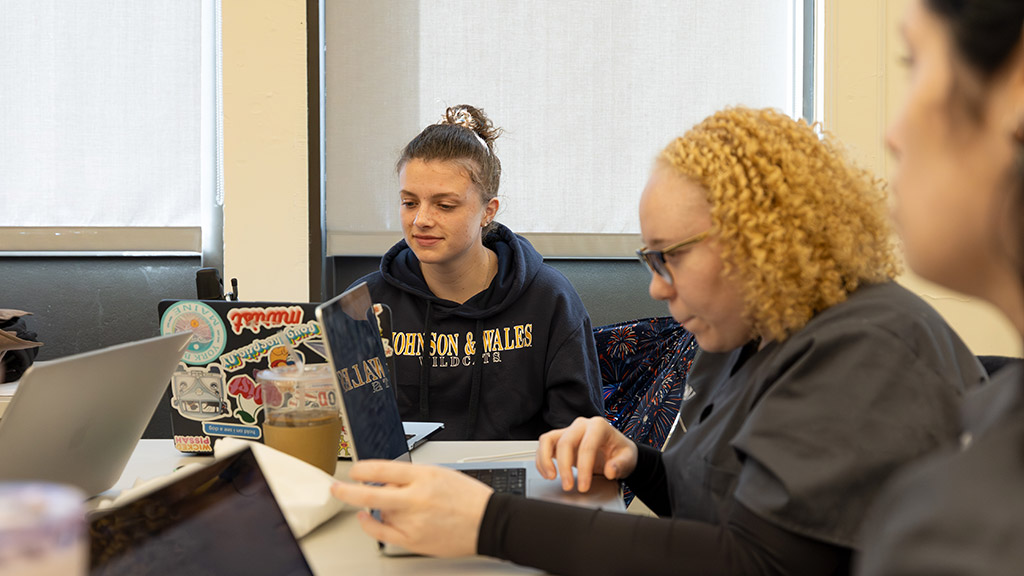
Caputo explains, “As a group, we asked what is currently working for her versus what could be improved, including preferences and sensitivities. We addressed her goals for meal planning and healthy snacks, her use of turmeric, how reducing fast food has impacted her, and how different foods affect how she feels overall. Together, these questions helped us to develop a better holistic understanding of Jessica to make better recommendations for her.”
Related Posts

Hospitality & Business
Experiential Education
Students