News
Arts & Sciences
Health & Wellness
News
JWU Dining Earns Two NACUFS Awards for Sustainability Efforts
Author Ava Morgan ’28 is a Marketing & Advertising major and works as a student assistant at JWU, contributing to JWU News.
Johnson & Wales University (JWU) Providence Campus Dining & Catering has earned national recognition from the National Association of College and University Food Services (NACUFS) for excellence in sustainability and student dining. After receiving a bronze award for Waste Reduction last year, JWU Dining earned two additional NACUFS bronze awards this year. The team was recognized for Residential Special Event of the Year, highlighting an outstanding dining hall event focused on the student experience, and for Sustainable Procurement, honoring their efforts to reduce waste and improve sustainable sourcing practices.
Even being a contestant in NACUFS is an amazing accomplishment. This elite competition showcases culinary skills, organization, technique, taste, style and sustainability. The recognition reflects JWU Dining’s continued strength in these areas.
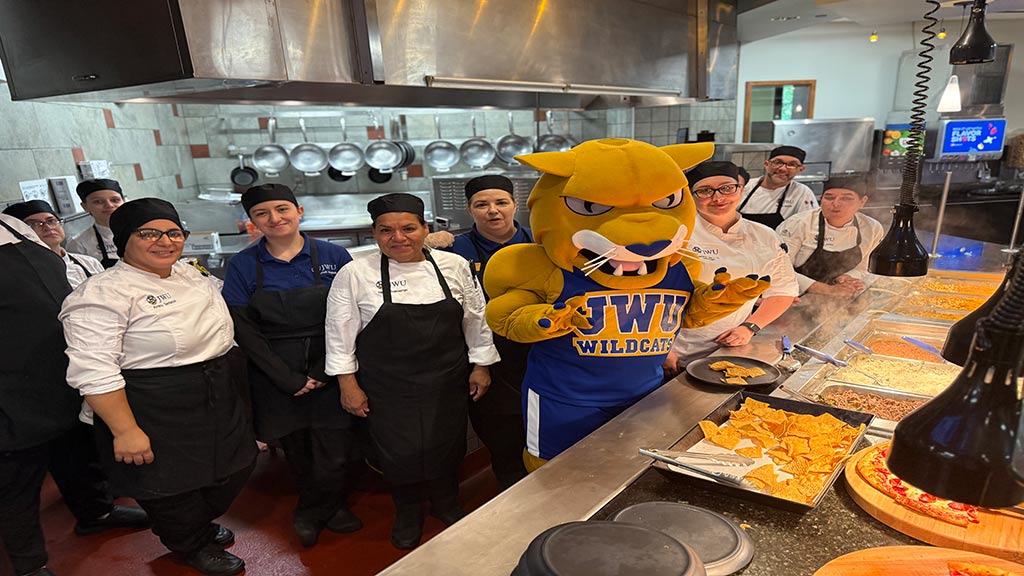
JWU Wins Residential Special Event of the Year Award
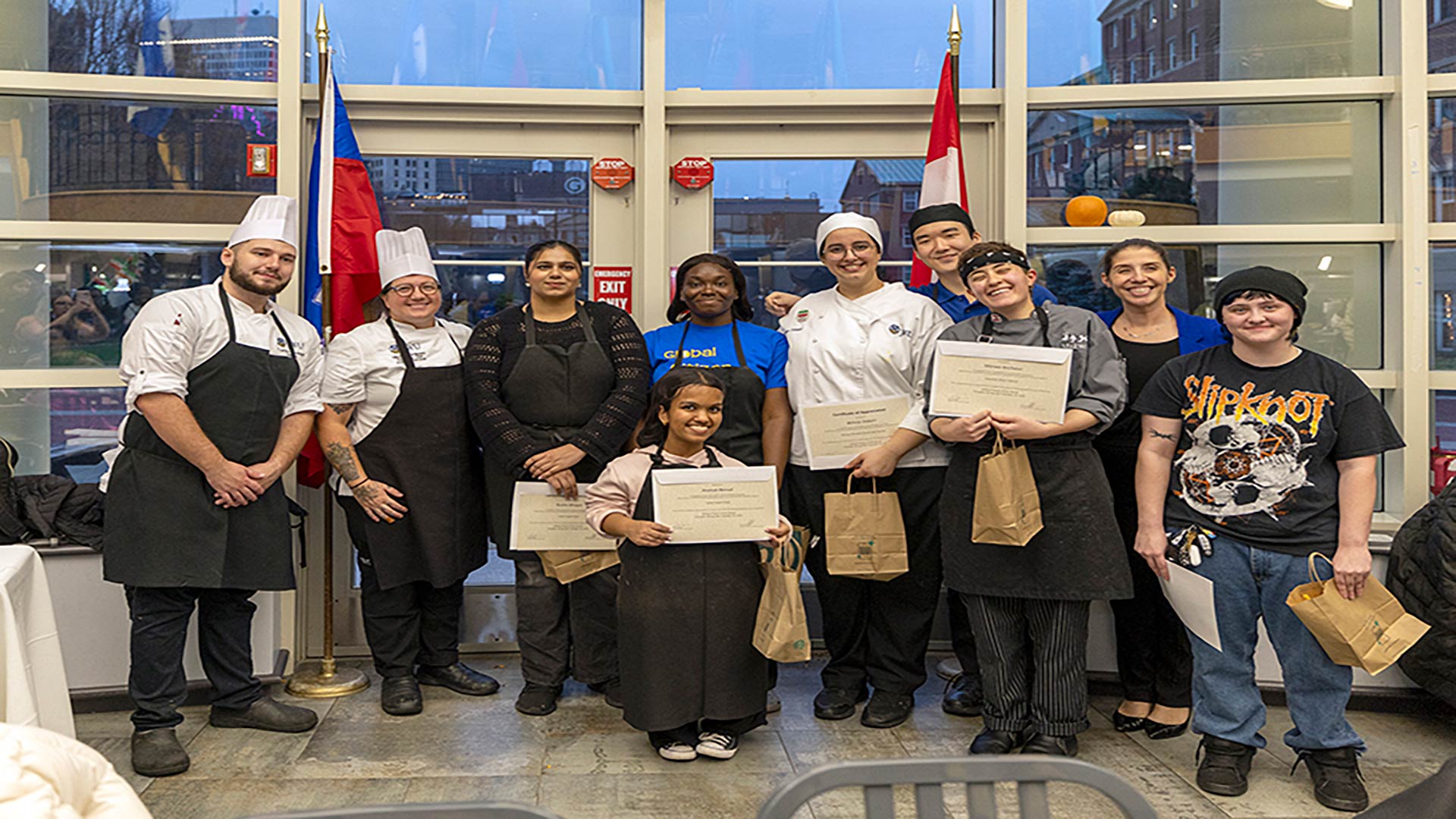
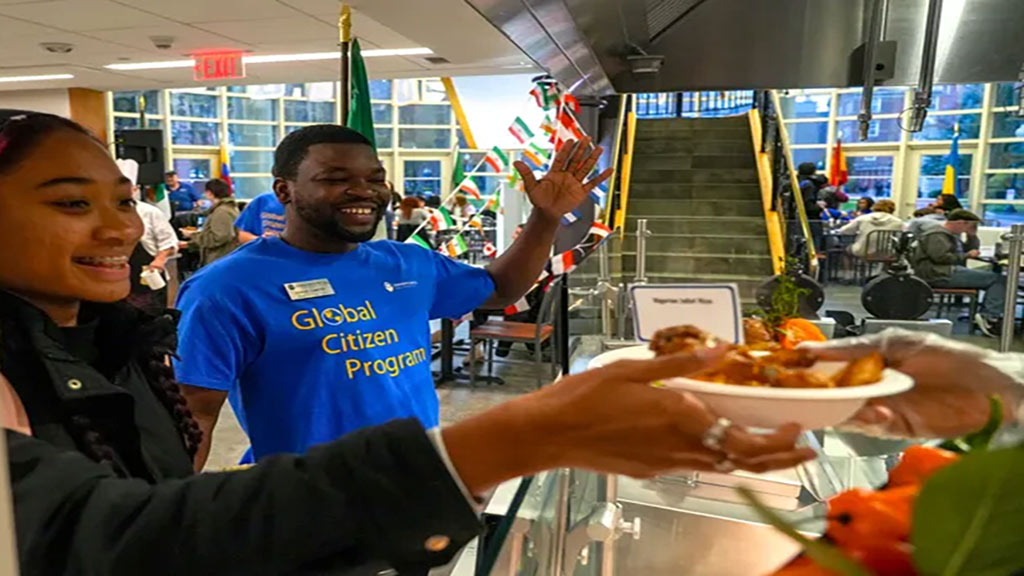
The Loyal E. Horton Dining Award for Special Event of the Year recognized JWU’s Wildcat Flavors of the World. This was a special event coordinated with JWU Global for JWU students that celebrated the diverse cultures in our community. Students from different countries got to takeover in the dining hall kitchen, sharing homemade dishes from around the globe.
“Food is the one thing that brings us all together, and we wanted to share that,” said Nico Sanfilippo, executive chef of auxiliary services.
For Sanfilippo, the awards represent years of dedicated work on creating a dining experience that reflects Rhode Island’s distinct food culture and diverse backgrounds of students here at JWU.
“We went from zero awards to winning one award last year, and then this year winning two awards” said Sanfilippo. “We want to make sure JWU is a part of the conversation nationally.”
Inside a Student’s Role in JWU’s Sustainability Efforts
Ishmael Lamptey ’26 M.S., a recent JWU graduate, was very involved in the Wildcat Flavors of The World. Lamptey completed his undergraduate degree in communications with a minor in journalism at Ghana University, where he also served as student government president before working with the Ghanaian government on youth development and tourism research. His experiences have shaped his interest in tourism and sustainable economic development, leading him to pursue a master’s in Global Tourism and Sustainable Economic Development at JWU.
Lamptey was involved with JWU campus life from the start. During his time on campus, he became president of JWU Global, a department that connects internation student admissions with international student services and serves as a support system for international students. Alongside Director of International Admissions and Student Services Wesley Roy, he took the lead on development and execution of The Wildcat Flavors of the world, partnering with Auxiliary Services, which supports key campus operations and student experiences, including dining services, to bring the event to life. “We were able to bring food and culture together,” Lamptey said, noting the importance of collaboration across campus. Lamptey added, “I’m happy the university got recognition. When we brought the idea of Wildcat Flavors of the world, the university embraced it. JWU is a good place, where they always accept diverse ideas.”
He also reflected on the broader impact of this initiative, saying, “Everything we did was out of goodwill to help students feel at home, especially international students, so it's amazing that we even picked up two awards based on the activities.”
JWU Awarded for Sustainable Procurement
The sustainability award was gifted to JWU dining for their efforts and initiatives in our dining halls and around campus. JWU was specifically recognized for its commitment to Rhode Island’s identity and creating a sense of place and belonging for students. This was accomplished through efforts such as prioritizing purchasing from local places, including Reds Best, Farm Fresh Rhode Island and Windsor Dairy.
JWU Dining does an amazing job at prioritizing where the food waste goes, so it’s not just being thrown in the trash. The goal of food waste is to go to humans first. On Harborside Campus, the leftover food gets donated to Wildcat Food Rescue, a student-run club that packages culinary lab leftovers into free meals for students. The Downcity Campus partners with a local community business called “We Rise by Lifting Others”; a lot of the food waste goes there. When the waste is not good enough for human consumption, it actually ends up going to a pig farm.
The waste reduction award won last year involved the bean-to-cup program, where JWU reduced the amount of waste that was being created due to coffee pods by replacing single-use Keurig pods at JWU's all-you-care-to-eat dining locations. “We now have four different local coffees from New Harvest”, said Sanfilippo. "There is a breakfast roast, a dark roast blend and two single-origin coffees. We also have a special blend over at JWU Local called Wildcat Blend.”
Partnering with all of these local businesses not only contributes to waste reduction but also helps students feel more comfortable and have a dining experience to remember.
“Creating a sense of place is important,” said Sanfilippo. “When students are done with school, I want them to remember we were in Rhode Island, and not New York City for example.”
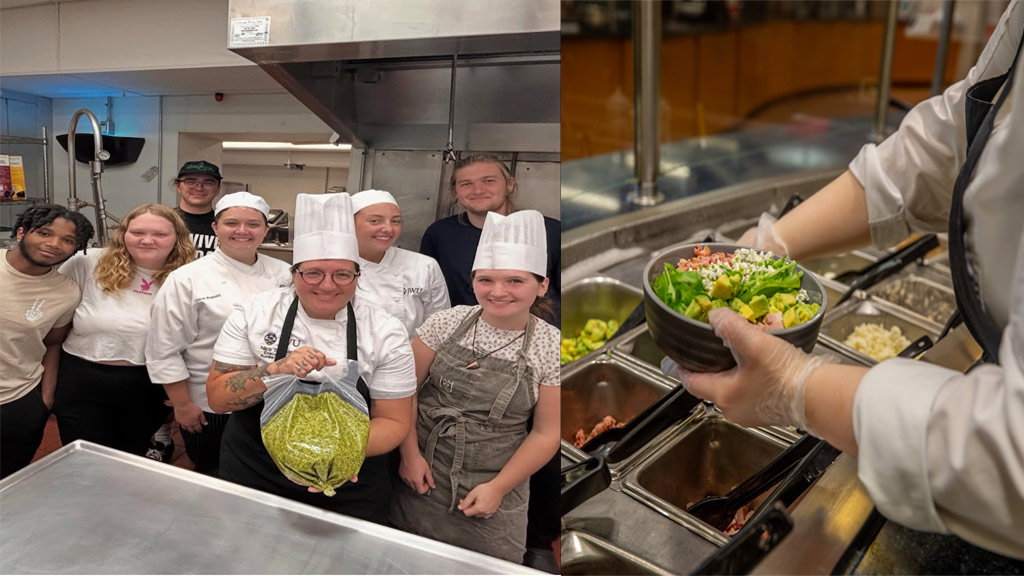
What Are JWU’s Ongoing Sustainability Efforts in Dining Services?
JWU has come far in reducing waste here on campus, but there's still more to be done. This year, over 250,000 pounds of food went to the pig farm; this is equivalent to the size of a blue whale, one of the heaviest animals ever known. Right now, a scale is used in the dining hall to weigh the food before and after to see how much food is leftover and going to waste, and to see if JWU can minimize that.
Director of Sustainability & Resource Management Matt Fannon speaks on some of the ways JWU is continuing its sustainability efforts through education, energy reduction and long-term campus initiatives.
“We are working to continue strengthening our campus education on the different waste streams through training and signage,” said Fannon.
Recently, Fannon and Sanflippo led training sessions for dining managers focused on properly sorting waste into the appropriate streams, such as recycling, compost and landfill. They also reviewed common items used in dining locations and identified opportunities to update waste station signage so staff can more easily determine where items should be disposed.
The ongoing efforts are part of a broader commitment to continuous improvement in campus sustainability. Fannon added, “We just achieved our seventh year of receiving the Tree Campus USA award, which we will continue to apply for.” Tree Campus USA was created by the Arbor Day Foundation in 2008. They recognize colleges and universities for their commitment to campus tree care and conservation. JWU earned the designation by meeting five standards, including a tree-care plan, advisory committee, annual funding and student engagement efforts.
Reflecting on all the work that is being done across campus, Fannon said, “I feel really lucky and proud to be able to work with a great team like them to continue improving our campus sustainability.”
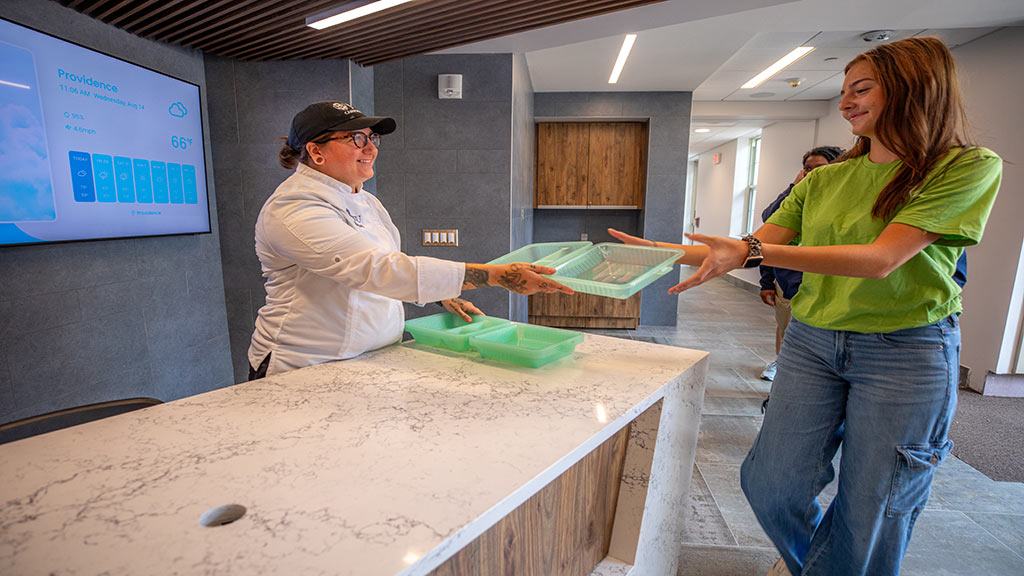
JWU Administrators Respond to NACUFS National Recognition
“When I returned to JWU’s Providence Campus, I shared with President Greene that if we wanted national recognition, we needed to be part of the conversation,” said Amanda Rotondi, DBA, executive director of auxiliary services.
“Thanks to the outstanding work of Nico, Matt, their teams and various campus partners, that vision is becoming reality. Being nationally recognized for the second consecutive year, and earning two awards this year, is something we should all be proud of.”
Added Rotondi, “We are building a strong foundation and are well on our way to being considered best in class!”