News
Arts & Sciences
Health & Wellness
Arts & Sciences
Alumni
New Portrait Honors JWU Founders Gertrude Johnson and Mary Wales
Visitors to The Alcove, a feminist space located in downtown Providence, are now greeted by a new portrait celebrating two women whose vision helped shape higher education in Providence: Johnson & Wales University founders Gertrude I. Johnson and Mary T. Wales.
JWU alumni can see the portrait in person during Homecoming & Family Weekend at A Night at the Museum with Mary & Gertrude on Saturday, October 3 in the Culinary Arts Museum. Following the viewing, attendees will enjoy a fireside chat with the artist, along with beverages and hors d’oeuvres.
Register for Homecoming & Family Weekend
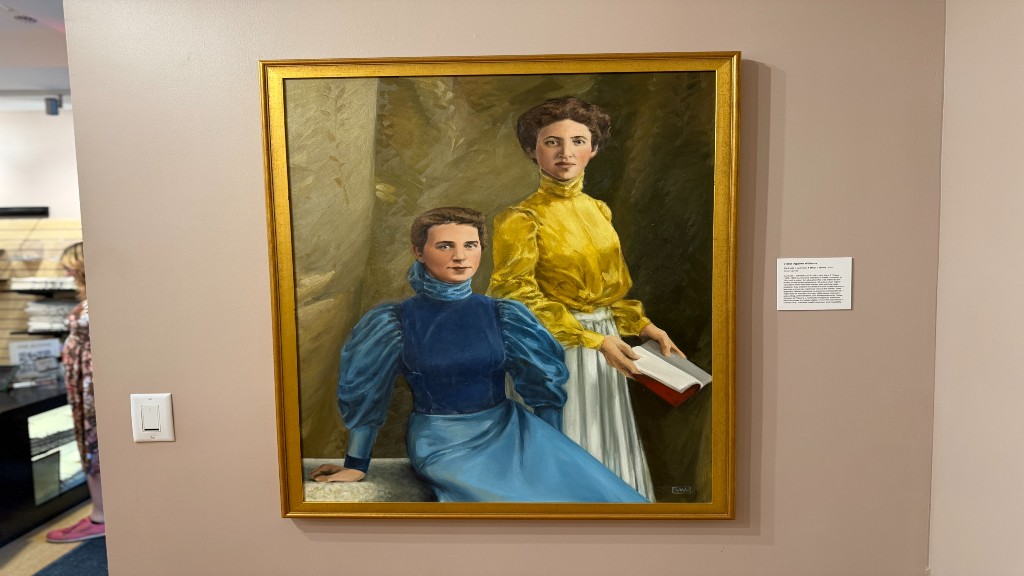
Painted by Rhode Island artist Victor Aguirre Williams, the large-scale, oil-on-canvas portrait is the first known portrait to depict the founders of Johnson & Wales University in full body composition. With only a handful of historic photos depicting them separately, Williams set out to imagine the pair side by side, honoring their partnership and the legacy that they built together.
“I wanted to give them the ability to be seen in full,” Williams said. “There are no pictures or paintings of them together, and they spent so much time working together to found and nurture Johnson & Wales University that they deserve to have that.”
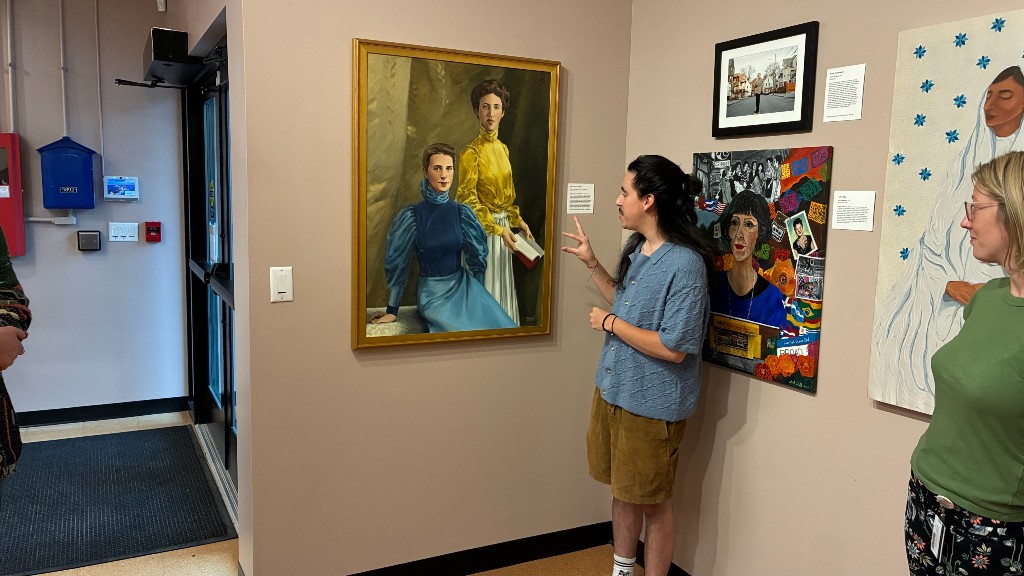
JWU at The Alcove
The portrait is currently on display at The Alcove, a nonprofit feminist center located in Providence’s Federal Hill neighborhood that is dedicated to celebrating the lives of women and gender expansive people through art, storytelling and community. Through its Portrait Gallery and Biographical Library, The Alcove illuminates the stories of the many female trailblazers whose contributions have shaped history, while opening the door for visitors to connect with their legacies.
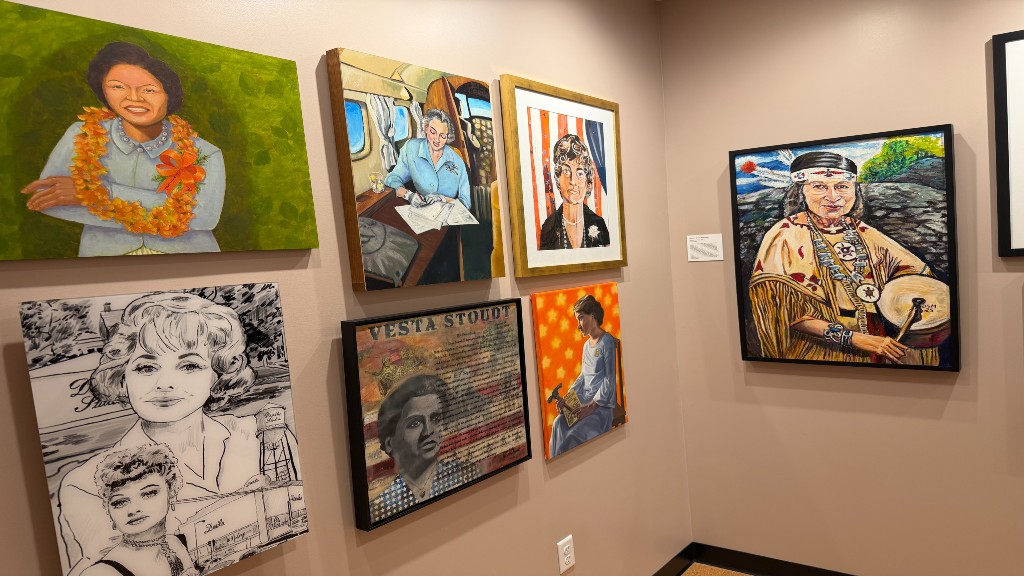
This mission was what drew Khamry Varfley ’24 MBA to the space, where she now serves as the inaugural curator and program manager after earning her graduate degree at JWU. “I knew I wanted to be a part of something that was bigger than me, that would advance other women like me in the state,” says Varfley. “It was definitely a draw to have all of those things in one spot and feel like I'm contributing to women in my community.”
Williams said the portrait felt like a natural fit for the space.
“It’s wonderful to have it at The Alcove,” he said. "It's right in the middle of all the action of Providence, and it makes me really proud that people from the university like it and feel represented by it."
The Design Process
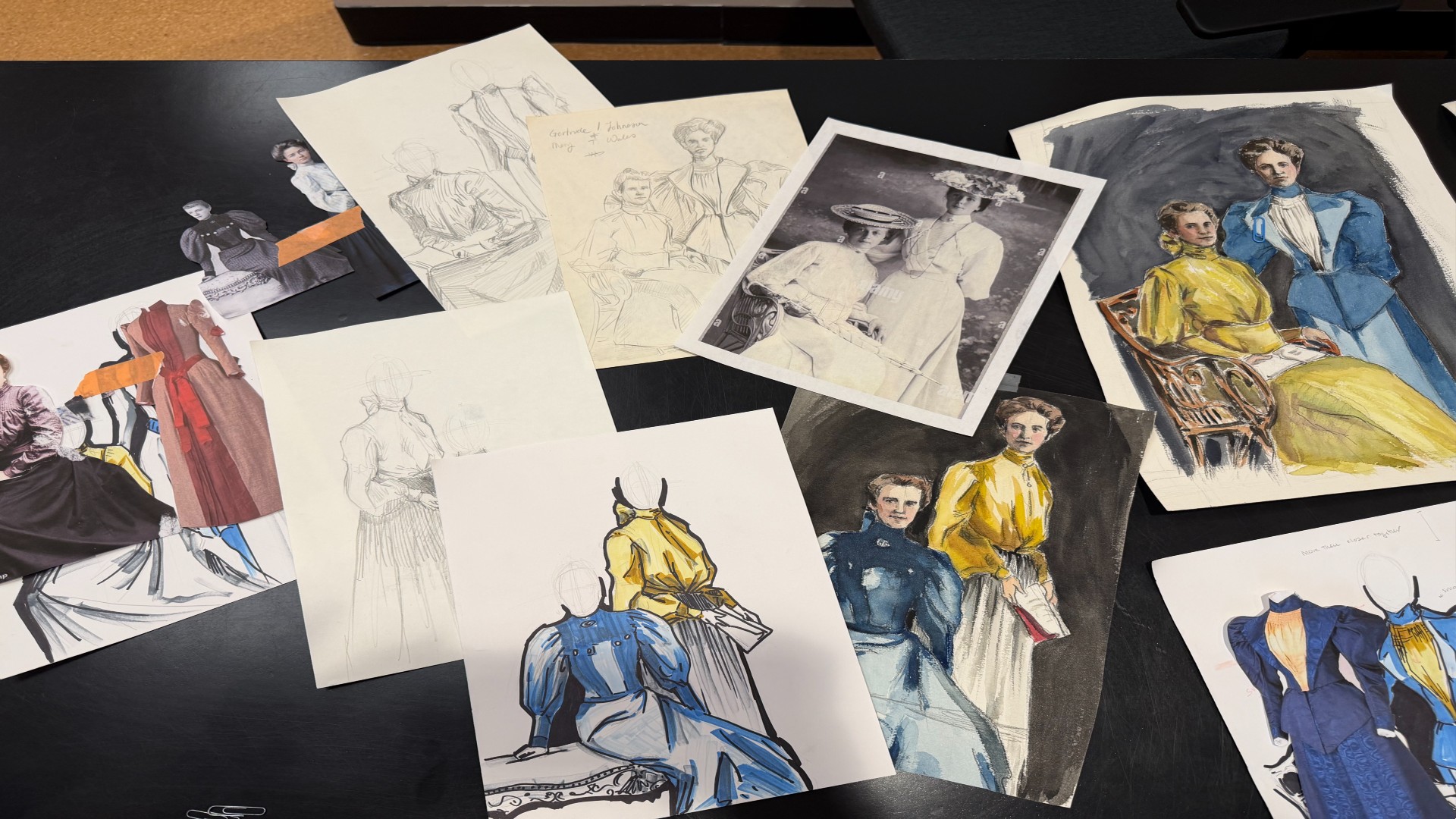
The painting took around six months to complete. Williams developed dozens of sketches and experimented with composition, clothing and color before ever touching the canvas. "I don't really use Photoshop," he said with a laugh. "So, I went the old-school way. Well, now I have all of this to show."
Williams’ process began with extensive historical research, gathering information on Gertrude Johnson and Mary Wales, as well as using the few photographs of them alongside portraits of other women from the early 1900s to study poses, clothing and compositions.
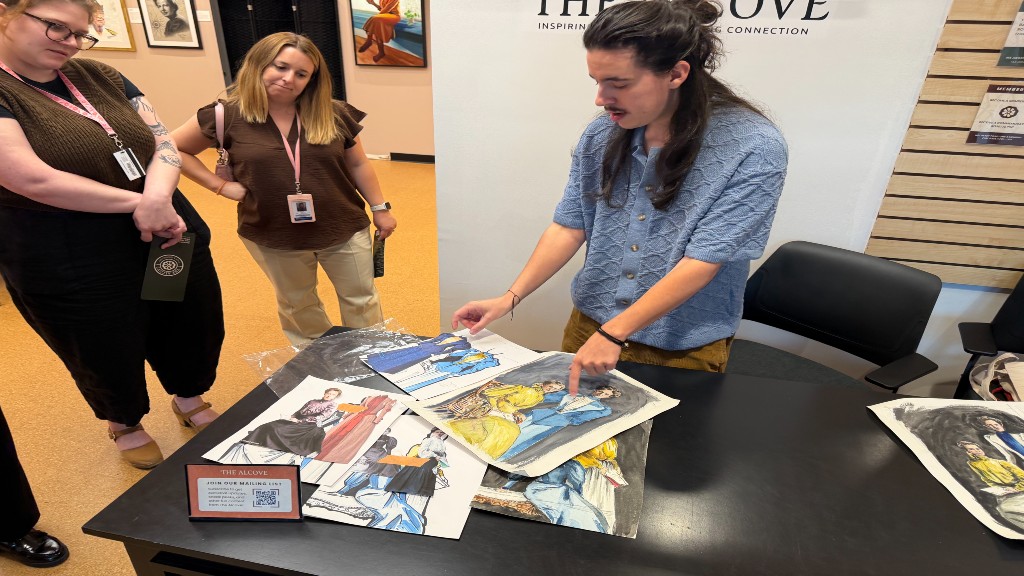
He filled pages with multiple sketches and ideas, trying out a variety of different arrangements before settling on the final design. “There were different pieces of each of them that didn’t quite fit,” he said. “One looked too rigid. Another looked a little too matronly. There was one where Gertrude was in front of Mary, and I thought ‘it’s looking a little bit schoolteacher,’ so I put her behind so Mary would have a bit more spotlight.”
Even colors were deeply considered, with multiple color combinations tested. “The outfits couldn’t just be brown and white,” Williams said. “The university colors were the perfect and most fitting final choice. I thought one has to be in gold, one has to be in blue.”
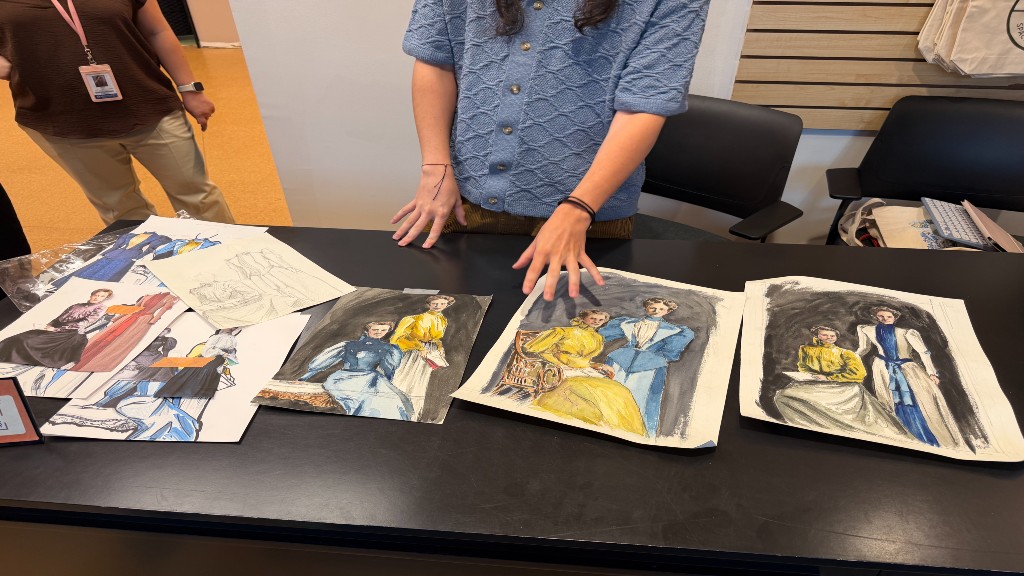
While he initially planned to illustrate them in even more elaborate gowns, he ultimately simplified the designs to maintain an understated elegance and accuracy with what they would have worn at that time. “I had to tone it down after coming up with really incredibly ornate dresses that I wanted to do,” he said.
The finished portrait also includes symbolic details, such as the book held in Wales’ hands. “They were very smart ladies that founded the university when very few women, if any, were doing that,” Williams said. “I wanted a little piece of that represented.”
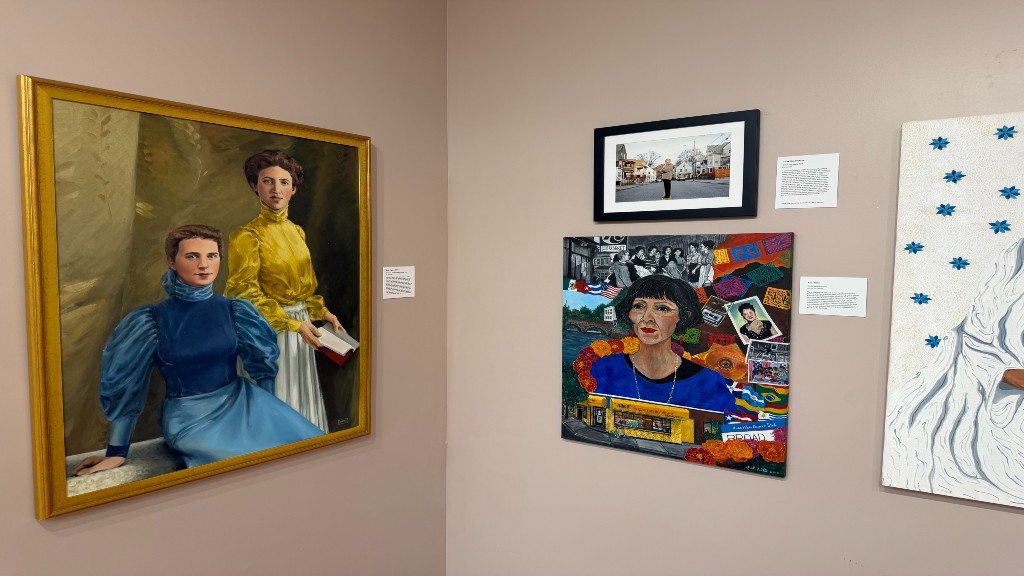
With only a few surviving photographs to reference, Williams was forced to balance historical accuracy with artistic interpretation when it came to the idealization of this portrait.
Only black and white images of Wales and Johnson remain, leaving small but important details such as eye color unknown. “Mary did have lighter eyes — they could have been green — but I chose blue to complement the dress,” he said. “Gertrude did have pretty dark eyes. Artistic choice.”
Inspired by Two Remarkable Women
For Williams, the founders’ perseverance was one of the central themes to be highlighted within the portrait. “I want to start off by saying how much I admire them,” he said. “First of all, for starting a university in 1914 when it was quite rare for women to do such things and then continuing their careers even after the founding of Johnson & Wales University.”
He was equally inspired by their determination to keep building, long after the founding of the university. “They had to fight against almost every power at the moment when they were founding the university,” Williams said. “They really stuck it through. They put a lot of effort into that, and it just expanded.”
Even with limited historical records about their lives, Williams saw a story worth telling. “They seemed like they never stopped,” he said. “They were really workhorses of their time.”
The early 1900s period itself was also a big inspiration to him as an artist. “It is the sweet spot for my art,” Williams said. “I love the aesthetics of it — the clothing, the style of painting and portraiture of the time. I am a very big fan of fashion and color, and they lend themselves very well to wearing those pieces.”
A Lasting Legacy
Today, visitors to the Alcove can view Mary T. Wales and Gertrude I. Johnson in a way that history never preserved. And for Williams, that is what makes the portrait so meaningful. “You couldn’t make a painter any prouder than having people admire your work and feel connected to it.”
Related Posts
Culinary
Alumni
Hospitality & Business
How 3 JWU Alumni Helped Run FIFA World Cup 2026
Arts & Sciences
Alumni