Hospitality & Business
Experiential Education
Students
Culinary
Alumni
Hospitality & Business
How 3 JWU Alumni Helped Run FIFA World Cup 2026
World Cup 2026 wasn't just something to watch — it became a career-defining moment for JWU alumni whose work was inseparable from the tournament, now considered the largest sporting event in history. The 2026 tournament spanned 104 matches across three countries and 16 host cities, with 48 teams competing over 39 days in front of millions of fans.
Behind the World's Largest Sporting Event
"It's a combination of FIFA, the local organizing committees and the stadiums that put the events on," said Associate Professor Lee Esckilsen, College of Hospitality & Business, who has more than 40 years of experience in event and venue management. "Each of the 16 cities has a local organizing committee that works directly for FIFA and is funded by FIFA. FIFA employees handle all the travel, accommodations and logistics for the teams' travel across the three countries. Putting the tournament together was in the works for three or four years before the matches began."
Behind that massive operation were JWU graduates at every stage of their careers — from a student who landed a FIFA role before he'd finished his last final, to a decades-long culinary expert overseeing nutrition for the U.S. Men's National Team.
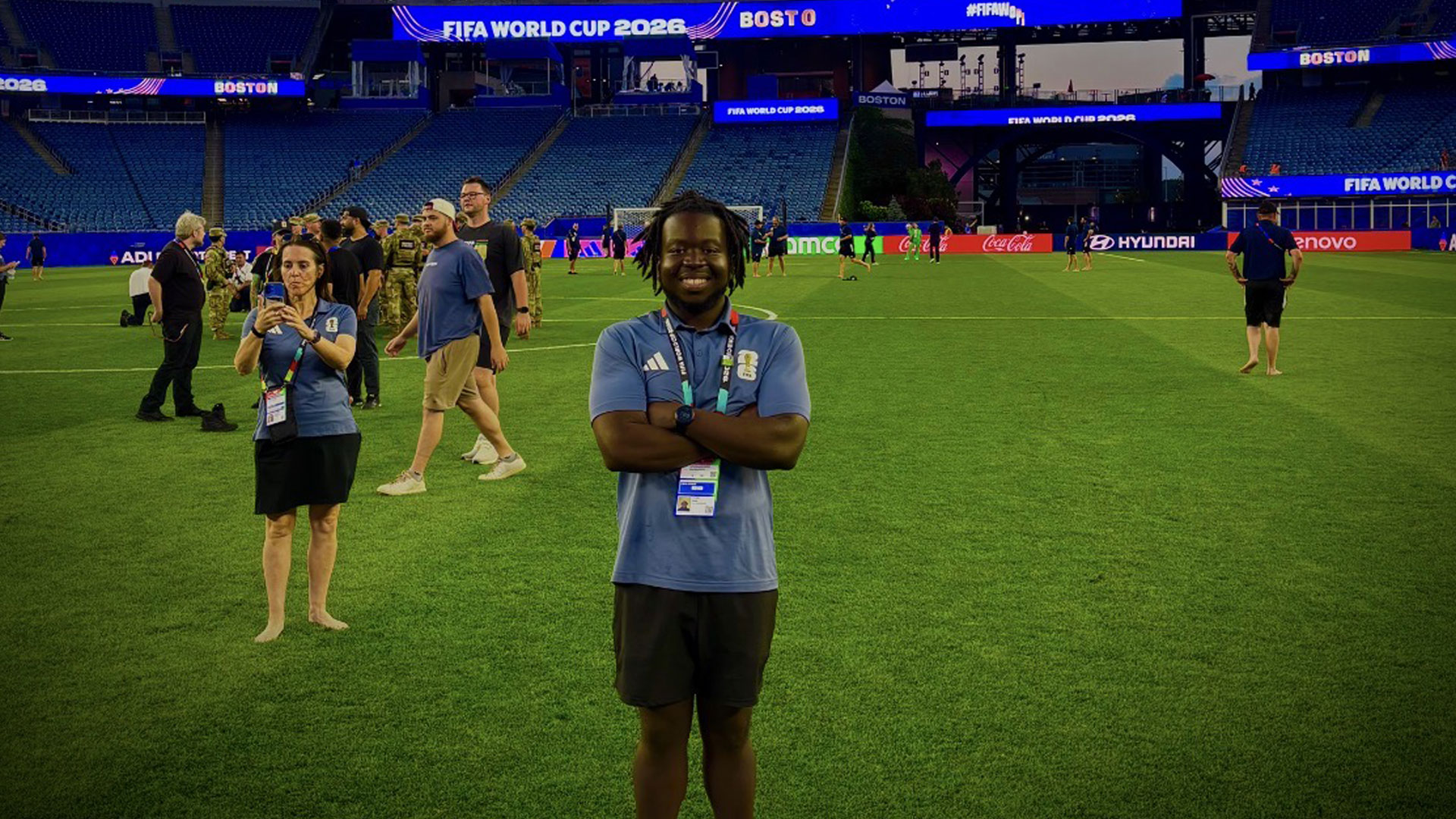
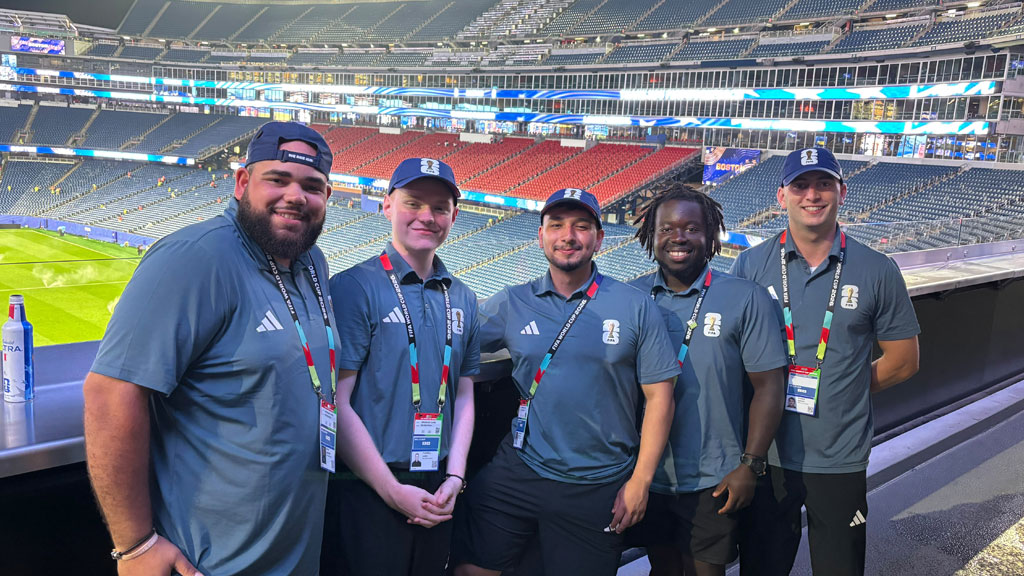 Soh Kone with FIFA colleagues at Gillette Stadium where World Cup 2026 matches in Boston were held.
Landing a FIFA World Cup Role Straight Out of JWU
As Soh Kone '26 finished the last course of his Sports, Entertainment, Event — Management (SEEM) B.S. degree, FIFA contacted him and invited him to apply for a World Cup 2026 position — his experience working at Gillette Stadium for the New England Revolution had caught the organization's attention. After an interview, FIFA hired him as a fan operations gate supervisor for World Cup 2026 matches at Gillette, renamed Boston Stadium during the World Cup.
As a SEEM major, Kone said one of his classes especially helped prepare him for his role with FIFA. "The Professional Sports Management class taught me everything about the sports industry and what happens behind the scenes. It made me fall in love with my program and solidify my career path," he shared.
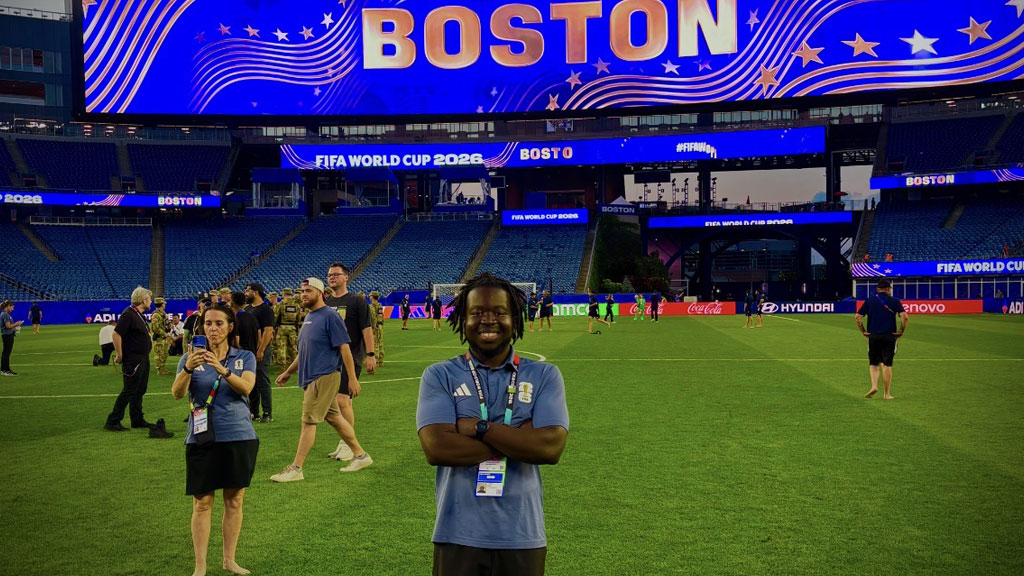 Soh Kone at Gillette Stadium where he worked for FIFA during World Cup 2026.
Kone and two colleagues in the same role managed the flow of fans into the stadium, directed them to the correct sections and assisted with exiting after the match. Together they oversaw 40 volunteers who guided fans to entrances and exits, answered questions about the stadium and area, and pointed fans toward nearby watch parties, restaurants and pubs.
"We had to provide the best experience possible for the fans attending who came from around the world. They knew nothing about the stadium or the area. We're the first stop in their World Cup experience, so making sure the volunteers provide the best experience for the fans is most important," Kone said.
A typical workday started five hours before kickoff. "There's a lot of setup to do — getting all the equipment for the volunteers, creating signs, charging the megaphones and making sure we communicate with the volunteers," Kone said.
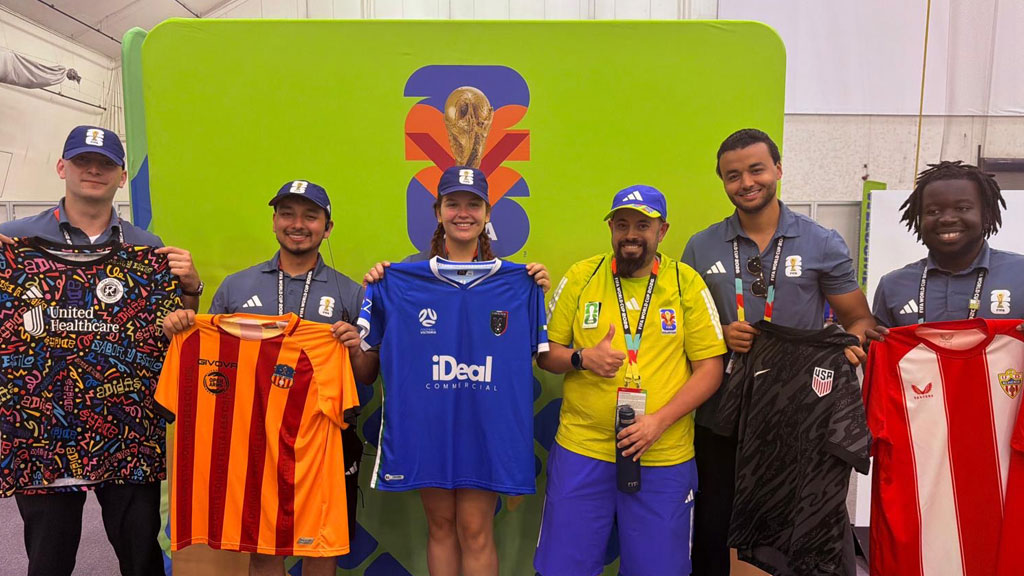 Soh Kone and Fifa colleagues hold up World Cup 2026 jerseys given to them by one of their volunteers.
Meeting fans was the highlight. "At the first match at Gillette, between Haiti and Scotland, there were more than 61,000 ticket holders. I was out there with the fans before the match and that's when they're the most energetic — chanting, singing, it's just a fun experience and they were so kind," Kone said. "After growing up watching the World Cup and then having it right in front of my eyes, it was definitely a dream come true."
Kone credits Associate Professors Liz Covino and Lee Esckilsen and Adjunct Faculty Louis Pullano for helping him work towards a sports industry career while still a student. "They were my biggest mentors," said Kone. "Every time there was an opportunity to gain experience, they reached out to me and said, 'Hey, I think this is something you should do.' I give a big shout out to them. I knew I wanted to work in sports, but they helped me fall in love with this industry."
Four Years of Preparing for World Cup 2026
When Boston was named a World Cup 2026 host site nearly four years ago, Jonathan Walker '14, '17 MBA, executive director of the Rhode Island Sports Commission at GoProvidence, saw an opportunity. Matches would be played at Gillette Stadium in Foxborough, Massachusetts, closer to Providence than to downtown Boston.
"Our main goal at the Sports Commission is to draw visitors into the state through the lens of sports," Walker said. Positioning Rhode Island as a place for World Cup visitors to stay, eat and experience local culture was, he said, the perfect opportunity to boost tourism and the local economy.
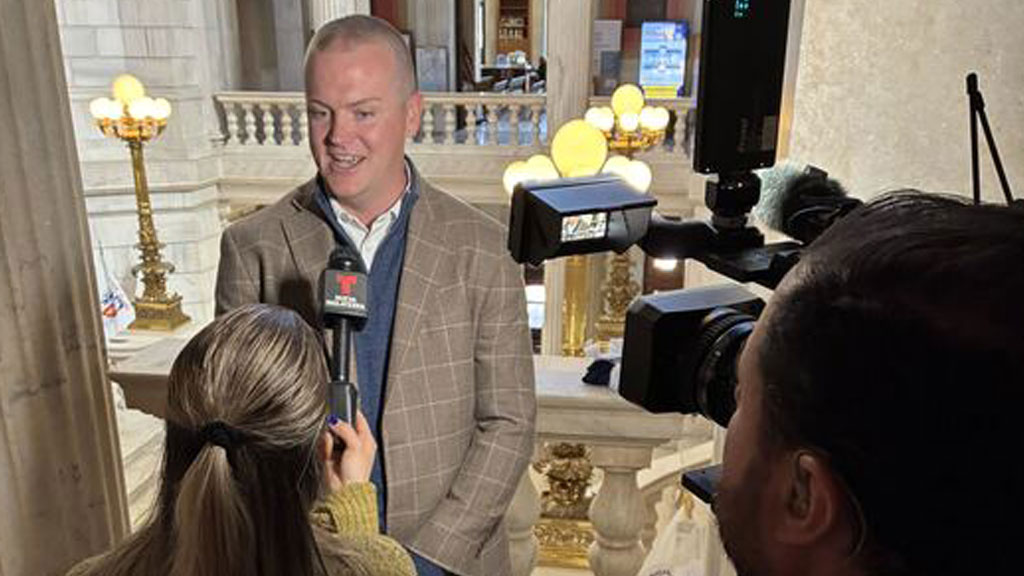 Jonathan Walker being interviewed by Telemundo at the Rhode Island State House about World Cup activities.
"Once we learned Boston was named a host site, we went to work," Walker said. With Providence just 25 miles from the stadium, his team submitted bids to FIFA proposing Rhode Island as a team base camp. He toured colleges, universities and other sites to find facilities meeting FIFA's specifications, and Bryant University was ultimately chosen.
In December 2025, Walker learned which team would be based there. "We had to act quickly. We wanted to showcase not just Bryant, but the airport arrival, the hospitality at the hotel, the whole destination — and we had to follow FIFA protocols," he said. The Ghana national team chose Bryant, and Walker worked closely with the Ghana Football Association to coordinate training and accommodations.
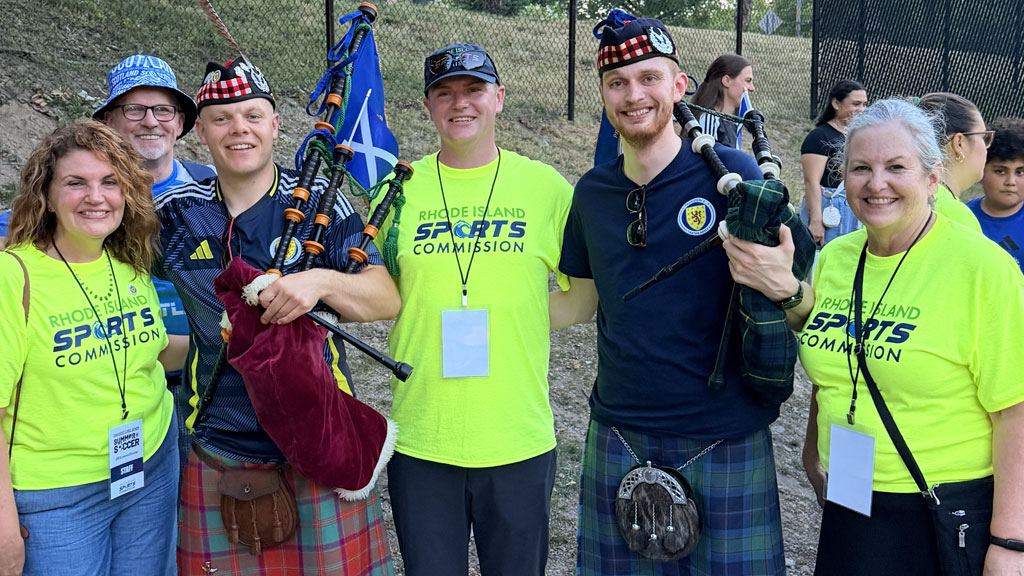 Jonathan Walker with Scottish bagpipe players who played at World Cup 2026 events in Rhode Island.
Walker made sure Rhode Islanders could take part, too. Local youth athletes watched Ghana's players train at Bryant and joined a clinic taught by both Ghanaian and Bryant athletes. Walker also partnered with the nonprofit Ocean State 26 to create the RI Summer of Soccer, a 39-day series of more than 100 events featuring Rhode Island culture, concerts, watch parties, player appearances, a Tartan Army march by Scotland's fan group, and a Taste of Ghana celebration. The initiative distributed $40,000 in grants to eight Rhode Island soccer associations, and the Ghana Association of Rhode Island helped plan cultural celebrations welcoming the team and its supporters. Momentum grew further when Providence was named an official FIFA World Cup FanZone.
Walker traces his career path back to his time at JWU as a Sports, Entertainment, Event — Management major. "My experiential education at JWU is the reason I'm in this position. If I hadn't had the opportunity to work directly in sports as a student, I wouldn't have had the confidence to go into a sales position, and I wouldn't have been aware of the different career paths and opportunities in the world of sports outside of actually playing."
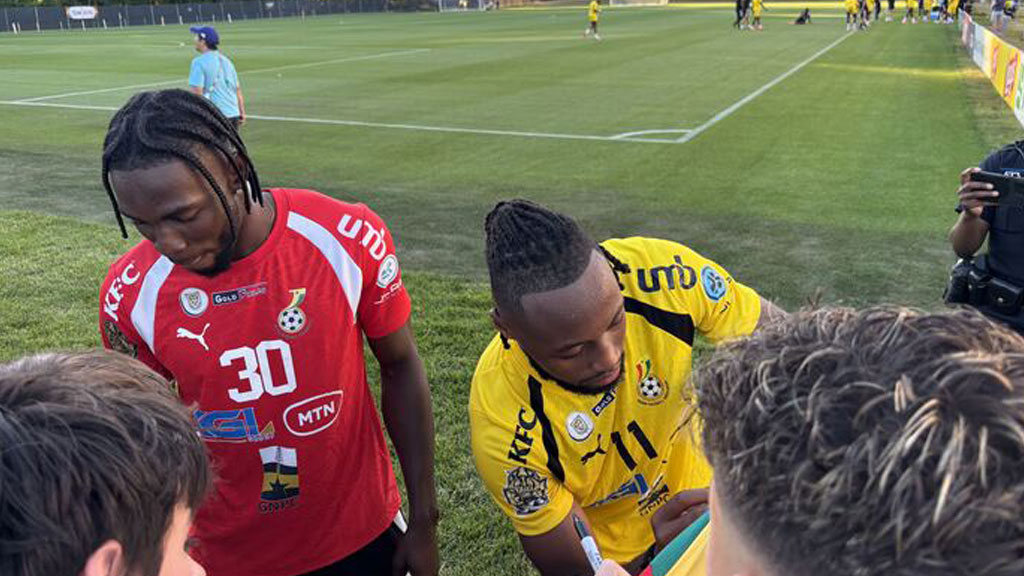 Ghana Men's team giving autographs at their Base Camp at Bryant University to a youth soccer team.
"Although RI didn't host any matches, we successfully positioned ourselves as a welcoming destination that benefited from one of the world's largest sporting events," Walker said. "The lasting exposure, positive visitor experiences and global recognition may ultimately be one of the tournament's greatest legacies for Rhode Island."
Below, Kendrick Quiñones Pagan '27, a senior Hospitality Management major and a Visitor Services Associate at GoProvidence, fills us in on what was happening at PVD FanZone.
View this post on Instagram
Fueling the U.S. Men's National Team
Varun Shivdasani '02 recently moved from Nottingham, England, to Fayetteville, Georgia, for a new role: executive director of performance culinary services for the U.S. Soccer Federation. Shivdasani, a graduate of JWU's Bachelor of Science in Culinary Nutrition, also holds a master's degree in physiology and nutrition of sport and exercise from Loughborough University.
Based at the Arthur M. Blank U.S. Soccer National Training Center, Shivdasani oversees culinary nutrition for all national teams under U.S. Soccer — including the Men's and Women's National teams, youth teams, the Beach Soccer team and the Power Soccer National Team for powerchair athletes. He knew when he accepted the role that he'd soon be working with the U.S. Men's National Team as they trained at the center just before the World Cup.
"Shivdasani described his role: "I standardize processes and procedures for menus and recipes and manage the nutritional analysis, then hand all that to the chefs to produce." He also manages the team's nutrition needs while traveling. "We need to make sure that a lasagna created in New York will be the same as a lasagna in their hotel in Japan when they travel there... they look at the food and they know what it is, because they're used to that standard and flavor."
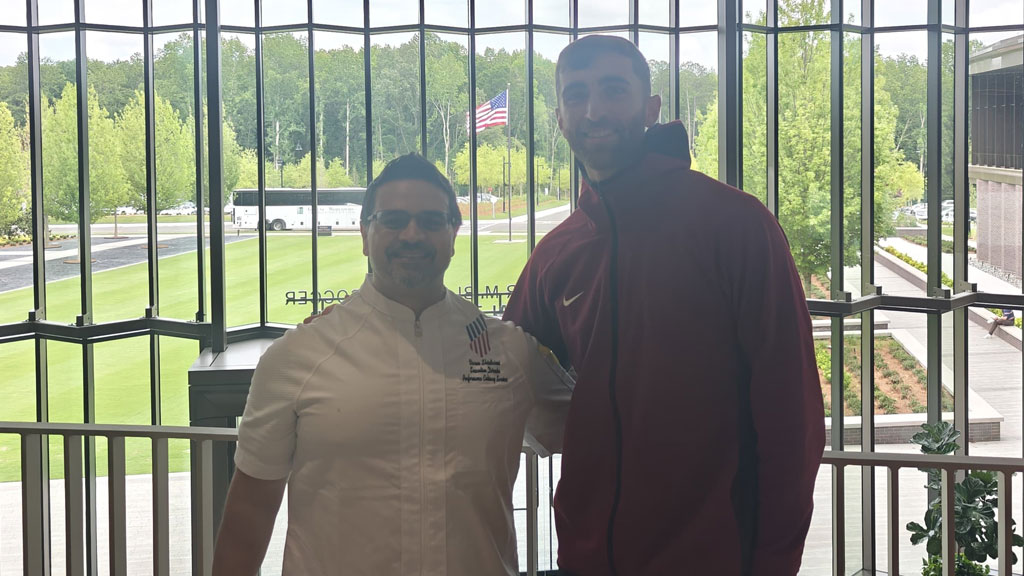 Varun Shivdasani and Matt Turner, goalkeeper for the U.S. Men’s National Team and New England Revolution at the Arthur M. Blank U.S. Soccer National Training Center.
Meals at the training center featured four proteins, three carbohydrates and three vegetables, rotating daily; an Asian-themed sushi menu was a team favorite. Head Coach Mauricio Pochettino had one special request — something sweet — and Shivdasani began bringing a tray cookies from his own recipe to Pochettino's afternoon meetings, a ritual he kept up even after the team moved on to Los Angeles for group-stage matches. "Our new home is amazing — and those cookies!" Pochettino said.
For Shivdasani, the work carried real weight. "There's definitely a sense of pride. Getting them prepared, not just in terms of fueling, but getting them in the right mindset to go into the World Cup. They want unity, family and good spirits."
Shivdasani is currently pulling together a team of travel chefs to support the U.S. Soccer teams while traveling. He is recruiting those chefs from JWU and they'll be helping Team USA succeed in tournaments around the world. "The World Cup may have ended but we have three more tournaments this year alone in Poland, Abu Dhabi and Morocco," said Shivdasani."
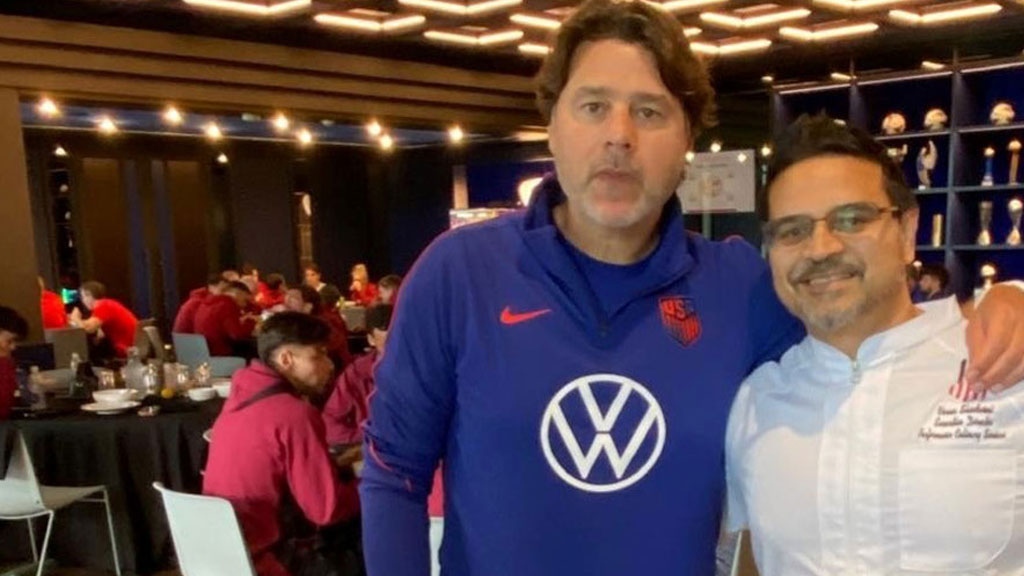 Varun Shivdasani and U.S. Men’s National Team’s Head Coach Mauricio Pochettino in the dining area with the team in the background at the Arthur M. Blank U.S. Soccer National Training Center.
Having begun his career in wellness resorts before moving into culinary athletic performance, Shivdasani explained how his JWU education, including the basic foundations of cuisine and the courses focused on spa cuisine, athletic performance and product research and development helped propel his career.
“I constantly use what I learned from the product research and development module in recipe development to make a recipe fit the specifications we try to achieve whether it's athletic performance cuisine or holistic wellness resort type food. The methodology I learned at JWU is still being used today.”
At a Glance: World Cup 2026's Impact on Rhode Island
Rhode Island saw a measurable tourism boost from the 2026 FIFA World Cup, even without hosting a single match. Nearly 450,000 fans attended the seven matches at Boston Stadium, many of whom spent time in or stayed overnight in Rhode Island.
- 10.8% increase in Providence short-term rental bookings
- $1 million-plus in rental revenue generated
- 42% revenue growth over the previous year
Getting Fans to the Matches
- 4,254 bus tickets sold by Stadium Express for Providence-to-Boston Stadium service
RI Summer of Soccer
- 39 days of celebration
- 100+ community events
- 145,000+ visitors to the PVD FanZone
- 6,000+ participants in the Tartan Army March
- 4,200+ fans at the Cape Verde National Team send-off celebration
Sources: inside.fifa.com, Rhode Island Sports Commission, Providence Warwick Convention & Visitors Bureau
Related Posts
Culinary
Alumni
Hospitality & Business
How 3 JWU Alumni Helped Run FIFA World Cup 2026
Arts & Sciences
Alumni
New Portrait Honors JWU Founders Gertrude Johnson and Mary Wales
Alumni
Hospitality & Business